Securing reliable HVAC Phoenix service protects indoor comfort and personal health when Maricopa County temperatures exceed 100 degrees for consecutive months. When severe summer heat strains run capacitors, fan motors, and compressor units, finding a dependable cooling and heating professional near me ensures fast restoration of balanced airflow without deceptive diagnostic markups or inflated part replacement fees.
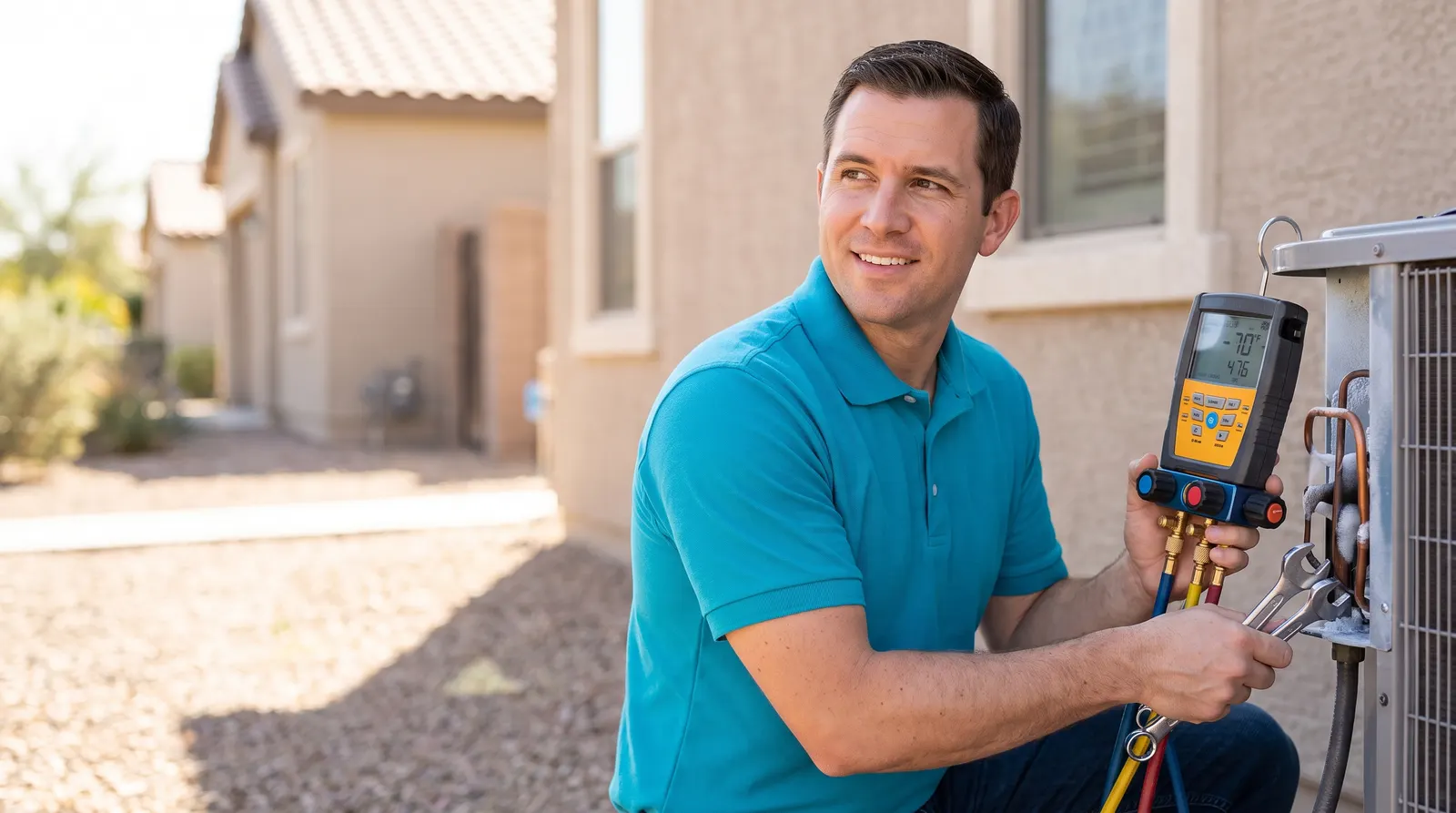
An HVAC company in Phoenix is a licensed mechanical contractor providing repair, installation, and preventative maintenance for residential and commercial cooling, heat pump, and ventilation systems engineered for extreme desert climates.
Every service reflects the same meticulous attention to detail — whether it's a single job or a larger hvac project across Phoenix.
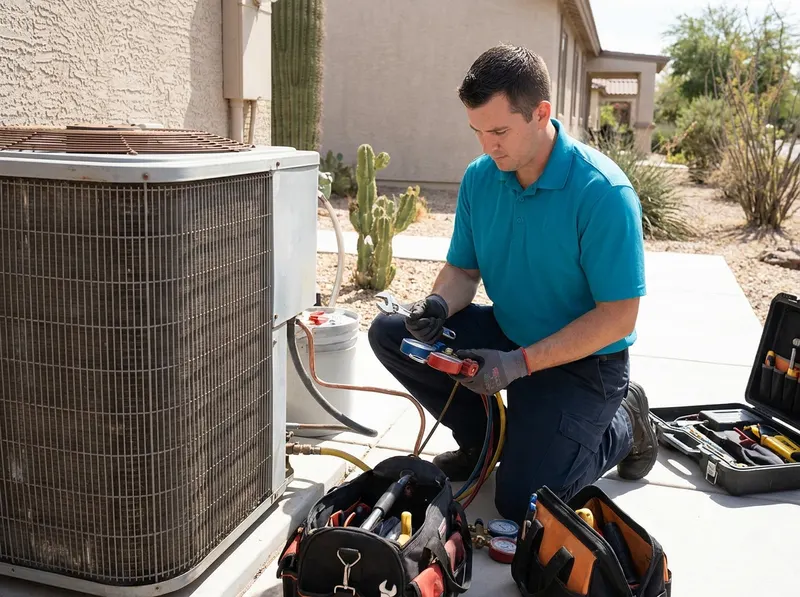
Air conditioning repair diagnoses and resolves sudden cooling outages across all major equipment brands, focusing on components most vulnerable to extreme desert operating temperatures. High ambient heat causes dual-run capacitors to lose capacitance, contactor points to weld or pit from high electrical arcing, and condenser fan motors to overheat and seize. Technicians run electrical diagnostics on microfarad ratings, test start-relay potential, check compressor winding resistance, and evaluate thermal expansion valve performance. If refrigerant levels are sub-optimal, technicians perform electronic nitrogen pressure testing to locate microscopic pinhole leaks in the evaporator coil before adding virgin R-410A refrigerant. Drain lines are cleared using pressurized nitrogen to remove algae and desert dust buildup that triggers safety float switches, ensuring cold airflow is restored safely without risking electrical short-circuits.
View details →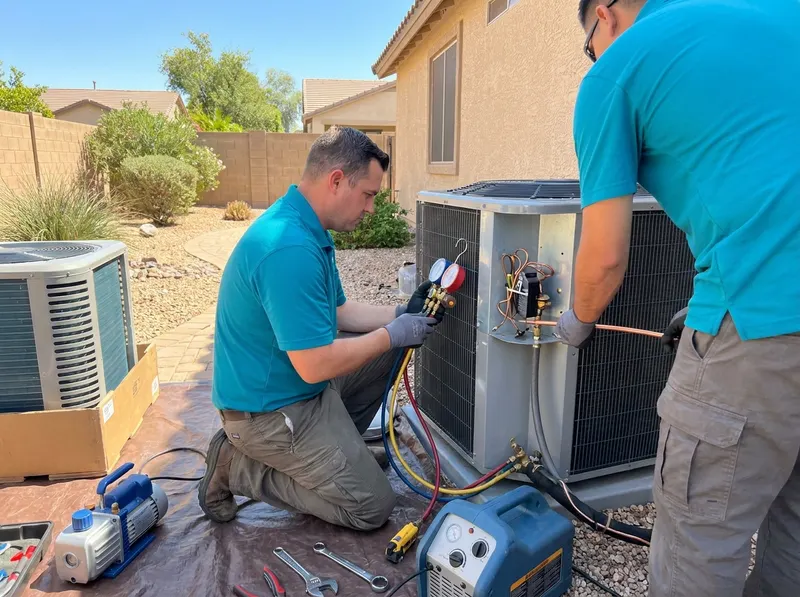
Air conditioning replacement replaces obsolete, inefficient cooling units with modern split-system air conditioners that meet the Department of Energy Southwest regional standard of 14.3 SEER2 (equivalent to 15.0 SEER) or higher. Technicians perform Manual J load calculations to determine exact residential cooling tonnage requirements, taking into account sun exposure, window glazing, attic insulation R-values, and ceiling height rather than relying on guesswork. Replacement packages include placing heavy-duty composite equipment pads, installing new copper linesets with proper oil-trap traps, connecting fused electrical disconnect boxes, and setting digital programmable thermostats. Transition plenums are custom-fabricated on-site from galvanized sheet metal to ensure airtight integration between the new indoor evaporator coil and existing ductwork, significantly lowering monthly SRP and APS cooling costs while improving overall indoor airflow.
View details →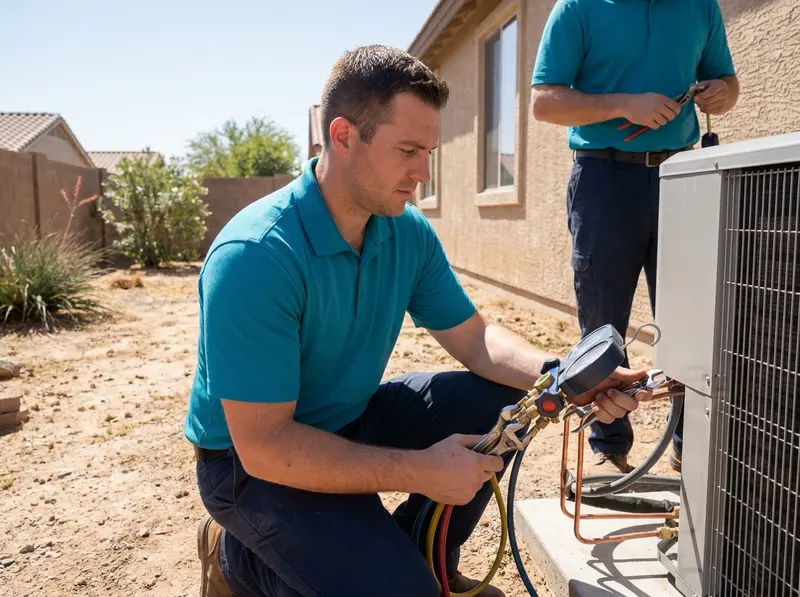
Heat pump services encompass complete diagnostic repair, seasonal tune-ups, and full system installations for dual-action heating and cooling systems commonly found in all-electric Phoenix neighborhoods. Service visits address stuck four-way reversing valves, malfunctioning solid-state defrost control boards, worn auxiliary electric heat strips, and low refrigerant charges that prevent efficient winter heating or summer cooling. For new installations, technicians size and configure multi-stage and variable-capacity inverter heat pumps that ramp up and down incrementally to match fluctuating indoor thermal loads. Inverter heat pump technology provides exceptional electrical efficiency during mild desert spring and autumn months while maintaining robust capacity during extreme 115-degree afternoon peaks, stabilizing indoor humidity levels and eliminating sharp electrical demand spikes across neighborhood utility grids.
View details →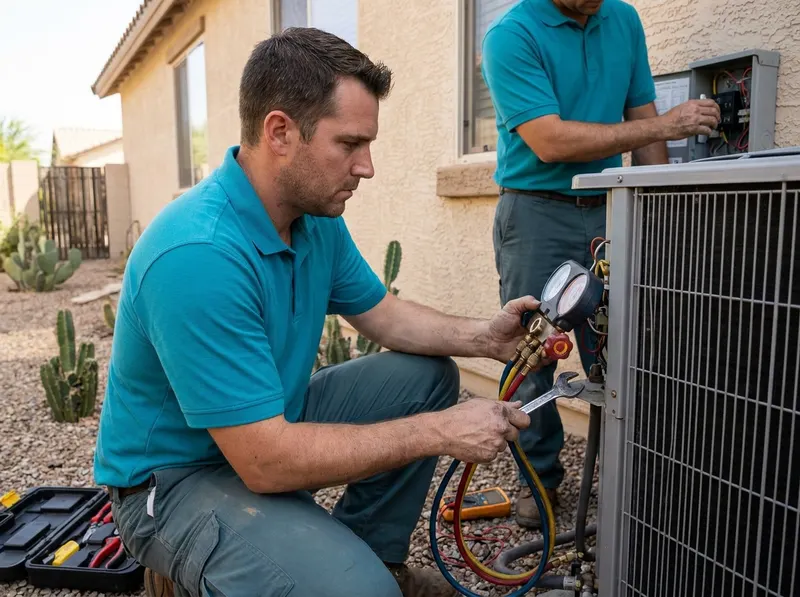
Seasonal preventative maintenance prepares residential HVAC equipment for relentless summer run cycles through a rigorous multi-point mechanical and electrical inspection. Technicians clean exterior condenser coils using biodegradable foaming chemical washes to dissolve baked-on caliche dust, road grime, and tree pollen that insulate outdoor fins and elevate head pressures. Electrical testing includes measuring operating amperage on compressor and fan motor leads against manufacturer factory specifications, tightening terminal connections, and verifying capacitor microfarad tolerances. The indoor air handler inspection checks blower wheel cleanliness, static pressure across the return and supply plenums, evaporator coil condition, condensate drain trap drainage, and thermostat calibration. Regular maintenance optimizes heat transfer efficiency, prevents mid-summer compressor burnout, and preserves manufacturer equipment warranties.
View details →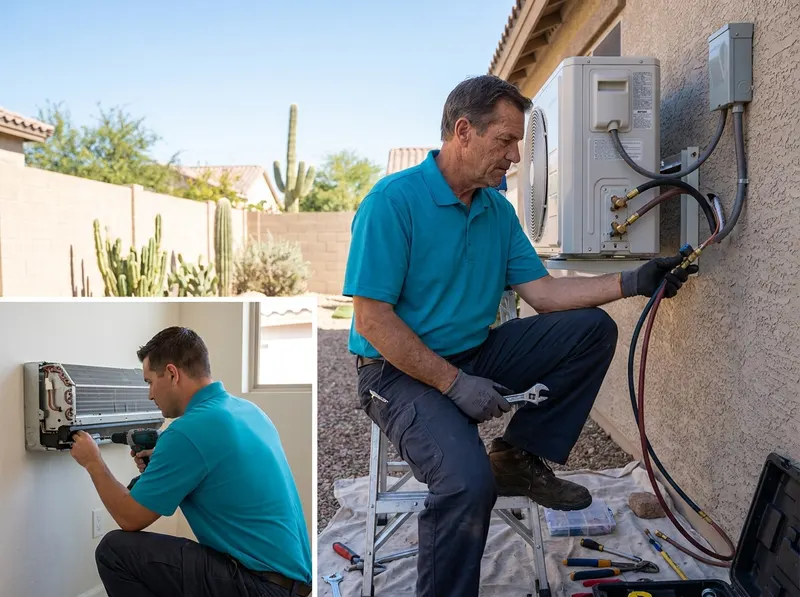
Ductless mini-split installation and service provides high-efficiency targeted cooling for spaces where traditional sheet metal ductwork is impractical, including residential room additions, detached workshops, enclosed patios, and older properties. Single-zone and multi-zone mini-split systems utilize variable-speed inverter compressors paired with whisper-quiet indoor wall, floor, or ceiling cassette air handlers. Technicians drill compact three-inch wall penetrations to run insulated refrigerant linesets, electrical communication wiring, and gravity condensate tubing directly to an exterior inverter condenser. Mini-split systems achieve outstanding energy efficiency ratings exceeding 20 to 28 SEER2, allowing homeowners to cool occupied living areas independently without wasting electricity on unused rooms, making them an ideal solution for home offices and sun-facing Arizona rooms.
View details →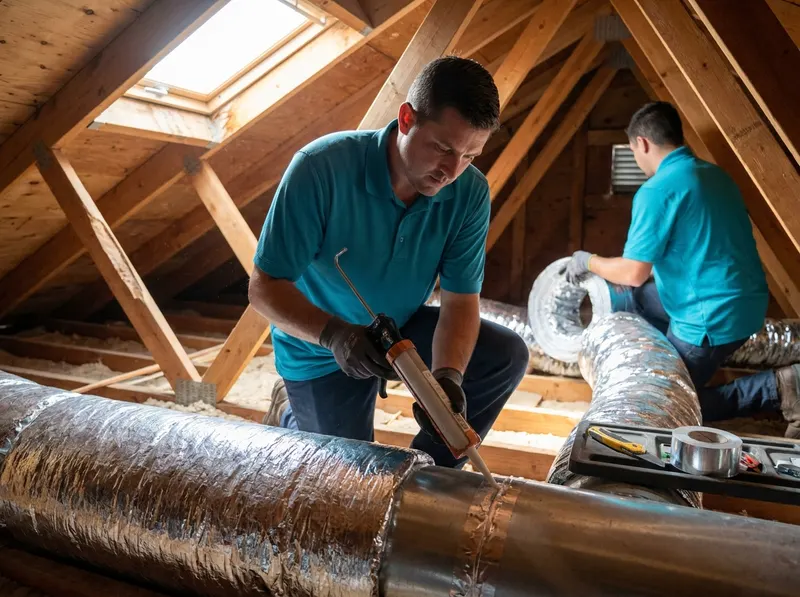
Attic ductwork sealing and replacement restores degraded air distribution systems operating in extreme attic environments where summer temperatures routinely exceed 150 degrees. Technicians inspect flexible and rigid metal duct runs for deteriorated outer vapor barriers, torn inner cores, crushed runs, and disconnected collar boots at ceiling registers. Leaking seams, supply plenum joints, and return air boxes are mechanically fastened with sheet metal screws and hand-sealed with fiber-reinforced fiberglass mesh and water-based mastic paste. For severely compromised, collapsed, or undersized duct systems, technicians install R-8 insulated flexible ducting suspended on support straps to prevent kinking. Proper duct sealing prevents hot, dusty attic air from being pulled into the conditioned living space, equalizing room temperatures and eliminating hot spots.
View details →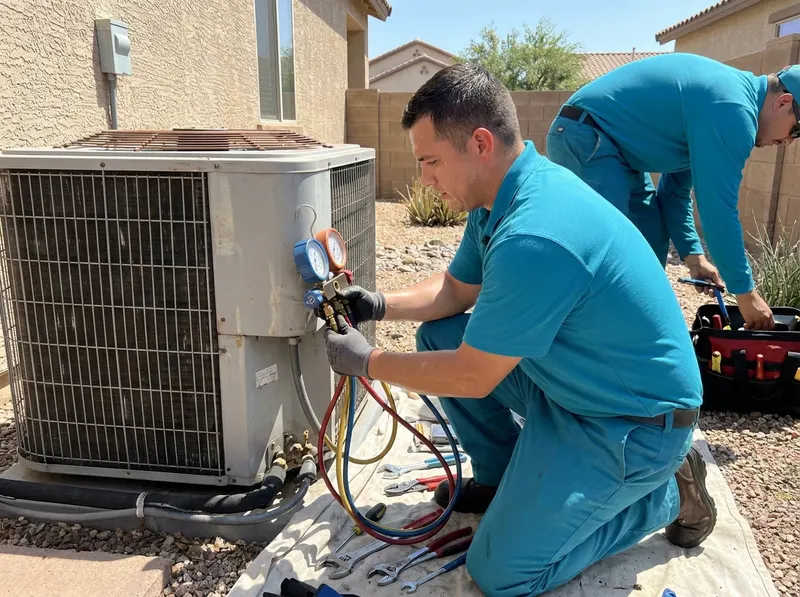
Emergency AC service delivers urgent mechanical troubleshooting and rapid component replacement when an air conditioner or heat pump fails entirely during extreme heat conditions. Prolonged indoor exposure to triple-digit desert heat presents immediate risks to infants, elderly residents, and domestic pets, making immediate response critical. Emergency service vehicles carry universal dual-round capacitors, high-amperage contactors, standard condenser fan motors, multi-tap indoor blower motors, transformer units, safety float switches, and standard refrigerants to resolve primary causes of sudden system shutdown on the initial visit. Technicians isolate electrical faults, restore refrigerant circulation, and clear frozen coils to quickly bring indoor temperatures down to safe, comfortable levels across residential properties.
View details →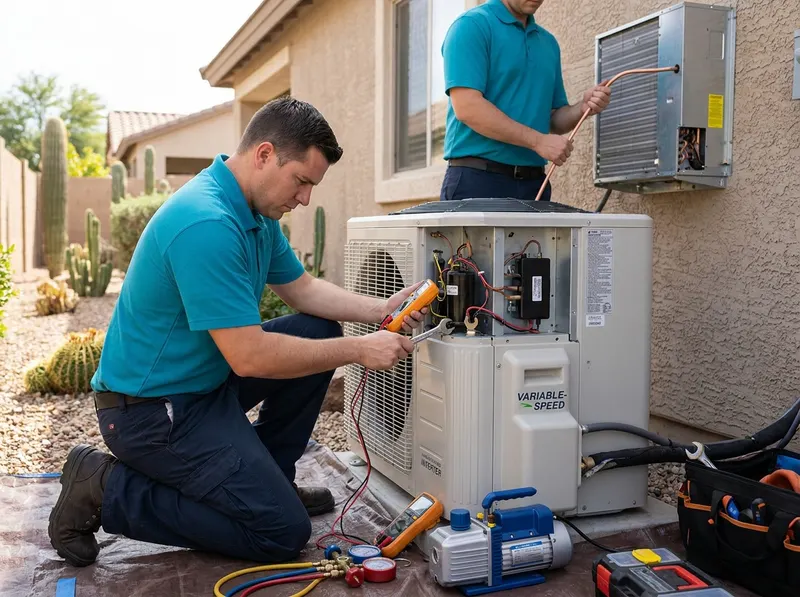
Variable-speed inverter system installation represents the pinnacle of residential energy efficiency and precision climate control for Maricopa County homes. Unlike traditional single-stage systems that operate strictly at 100% capacity or zero, inverter-driven compressors modulate their operating speeds in small 1% increments between 25% and 100% capacity. This constant modulation maintains indoor temperatures within half a degree of the thermostat setpoint while consuming a fraction of the electricity required by standard units. Technicians calibrate variable-speed indoor blowers to optimize static air distribution across existing duct systems, ensuring continuous low-speed air filtration that removes airborne desert dust, minimizes operating noise, and dramatically lowers summer peak demand charges on APS and SRP time-of-use rate plans.
View details →An HVAC company in Phoenix is a licensed mechanical contractor providing repair, installation, and preventative maintenance for residential and commercial cooling, heat pump, and ventilation systems engineered for extreme desert climates.
You get a firm, itemized quote for your hvac before any work begins — no surprises, no pressure.
Careful prep, tidy work, and a full cleanup when we are done. We treat your home and belongings like our own.
The same trusted, background-checked team from the first call to the final check.
Selecting the right cooling or heating strategy in the Salt River Valley depends directly on equipment age, refrigerant type, thermal efficiency targets, and current electrical consumption. If an air conditioner is under ten years old and suddenly stops producing cold air during a heat spike due to a swollen dual-run capacitor, pitted contactor, seized condenser fan motor, or clogged condensate drain line, choose targeted component-level AC repair to restore operation quickly and preserve your existing capital investment. If an existing cooling unit is more than twelve years old, operates on phased-out R-22 Freon, or suffers an internal compressor mechanical failure, choose a complete SEER2 heat pump or split-system replacement; the trade-off involves a higher initial capital outlay offset by immediate reductions in summer electrical bills, access to local utility rebates, and long-term protection against unexpected mid-season breakdowns. If specific living areas stay uncomfortably hot despite the primary system running continuously without cycling, choose dedicated duct sealing, plenum repairs, and manual airflow balancing dampers rather than purchasing a larger tonnage cooling unit; the trade-off is investing in attic duct insulation and distribution corrections rather than oversizing mechanical equipment that causes short-cycling and humidity imbalances. If evaluating multi-story homes or room additions such as garage conversions and detached guest casitas, choose an independent ductless mini-split system over tying into the central duct grid; the trade-off is installing a visible indoor wall-mounted head unit to achieve dedicated zone temperature control without overloading main ductwork. If scheduling annual maintenance to prevent summer breakdowns, book a comprehensive system tune-up between February and April; the trade-off is arranging service during spring rather than waiting for peak-season emergency response windows between June and August when technical crews prioritize total cooling outages across the Valley.
Every project gets a firm, written price after a free on-site visit. Ranges below for orientation.
Tell us about your hvac job and we'll send a clear, written quote — usually the same day. Or just call and talk to a real Phoenix pro.
Phoenix experiences some of the most demanding climatic conditions in North America, with summer temperatures routinely exceeding 115 degrees for multiple consecutive weeks. This relentless heat places severe mechanical strain on outdoor condenser coils, run capacitors, and compressor motors, while attic temperatures across Maricopa County frequently climb past 150 degrees. In neighborhoods such as Arcadia, Ahwatukee Foothills, and the Biltmore Area, unshaded rooftop package units and attic-mounted air handlers must push cold air through extreme ambient heat zones. Fine caliche dust, kicked up by seasonal monsoon storms and haboobs passing Camelback Mountain, South Mountain Park and Preserve, and the Phoenix Mountains Preserve, coats outdoor aluminum fins and rapidly degrades heat transfer capacity. Furthermore, homes situated near Desert Ridge, Deer Valley, Encanto Village, and Maryvale experience significant peak-load electrical demands across APS and SRP power grids. Having cooling equipment accurately sized and calibrated for regional heat dissipation prevents blown transformers, avoids compressor thermal overloads, and protects indoor air quality near local landmarks like the Desert Botanical Garden, Papago Park, Footprint Center, and the Heard Museum.
 EliteBreeze SystemsHVAC